
Zest Protocol: Toward a Capital Layer for Bitcoin
From Digital Gold to Digital Collateral: Unlocking Untapped Bitcoin Capital

Disclaimer: This report reflects the author's opinions and is provided for informational purposes only, without the intent of recommending the purchase or sale of tokens or the use of any protocol. Nothing in this report constitutes investment advice or should be interpreted as such. Zest Protocol is a project in which DeSpread has invested.
1. From Digital Gold to Digital Collateral

Over the past few years, Bitcoin appears to have established itself as digital gold. The approval of spot Bitcoin exchange-traded products by the U.S. Securities and Exchange Commission (SEC) in 2024 opened a route for investment through brokerage accounts, and Bitcoin began to enter mainstream asset allocations. Then, in March 2025, the U.S. government ordered the creation of a Strategic Bitcoin Reserve, directing that forfeited BTC allocated to the reserve be held as a national reserve asset. The acceptance of Bitcoin as an asset worth holding for the long term has thus extended beyond private finance into national reserve policy.
Market pioneers are already preparing for the next stage. They are looking beyond holding Bitcoin for the long term to putting it to use as collateral in capital markets. If holders can raise cash or stablecoins against BTC, they can obtain the funds they need without selling their Bitcoin, while capital providers gain an opportunity to lend against BTC and earn interest. As lending products emerge to meet this demand, Bitcoin, already established as digital gold, has also begun to serve as digital collateral.
In the institutional market, FalconX announced in May 2025 that it had secured its first Bitcoin-backed financing from Cantor Fitzgerald. Bitcoin served as collateral for funding its institutional clients' trading, hedging, and liquidity management. The two companies also announced plans to expand their credit transactions to more than $100 million, starting with this deal.
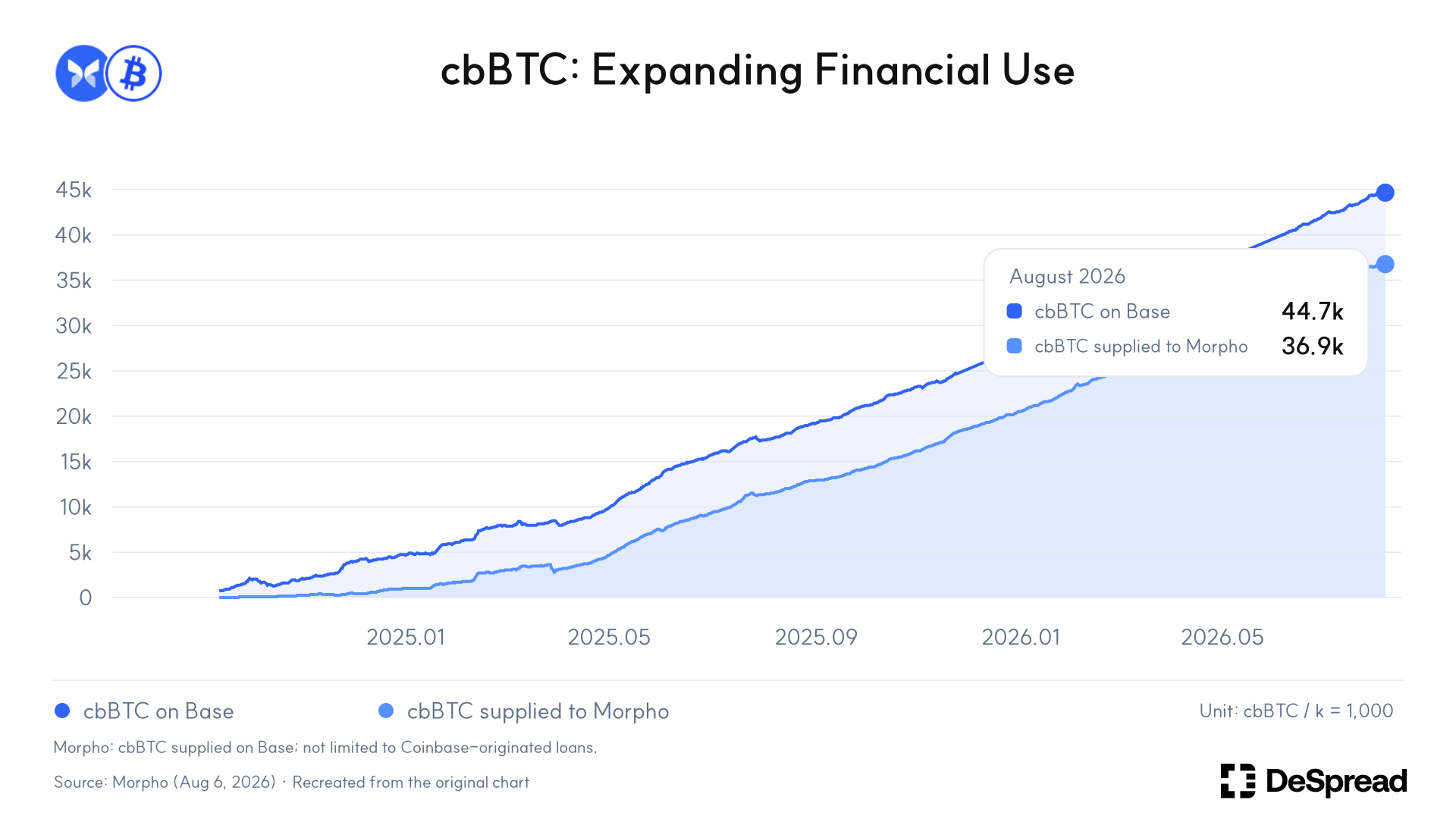
For individuals, Coinbase has opened a route to borrowing against BTC. In the service introduced in January 2025, users' BTC is converted into cbBTC and deposited as collateral in Morpho smart contracts on Base, allowing them to borrow USDC from suppliers who have deposited funds in Morpho markets. Coinbase provides the customer interface and handles BTC custody and conversion, while Morpho's lending contracts handle collateral management, borrowing, repayment, and liquidation. According to Morpho's August 2026 announcement, the cbBTC collateral associated with the Coinbase borrowing service had reached a value of $2.5 billion, making it a clear example of how demand for funds without selling BTC is translating into actual financial activity.
As BTC, an established long-term holding, also becomes a means of raising funds, its transition into a collateral asset is gathering pace.
2. A Native Collateral Market Yet to Fully Open
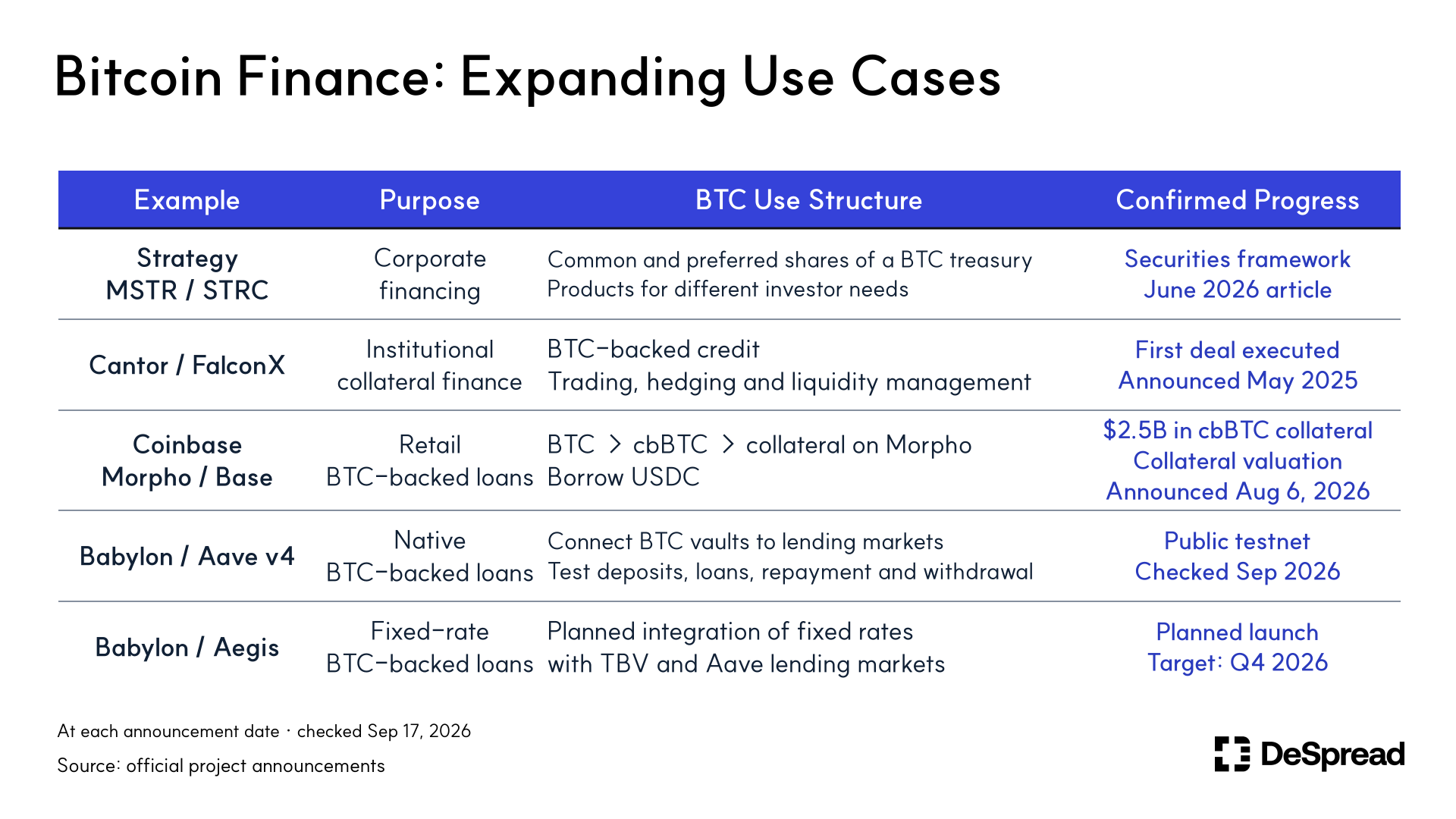
As the preceding examples and the table above show, efforts to put Bitcoin to financial use are already underway among institutions and individuals, both onchain and offchain. To use these products, however, participants must accept each structure's custody and asset management arrangements. The main risks borrowers must accept are as follows.
- Custodian risk: Mismanagement or insolvency at the institution holding the BTC may prevent borrowers from recovering their collateral on time.
- Wrapping and bridge risk: The value of wrapped BTC depends on the custody and redemption arrangements for the underlying BTC, and if a bridge is involved, borrowers must also accept the risk that an attack or verification failure could impair the collateral's value and recoverability.
- External contract and chain risk: Vulnerabilities in the smart contracts that manage DeFi collateral, or disruptions on an external chain, can lead to asset losses or delays in repayment and withdrawal.
Institutions that apply stricter custody and security standards, in particular, prioritize the security assumptions under which their holdings can be protected over the financial uses those holdings might offer. Muneeb Ali, founder of the Bitcoin Layer 2 (L2) network Stacks, said, “Institutions want their Bitcoin to earn Bitcoin without giving up custody or moving it off the base layer,” while Jesus Rodriguez, co-founder of the institutional DeFi platform Sentora, likewise noted, “That shift from counterparty risk to technical and economic risk keeps institutional capital on the sidelines.” Institutions differ in the custody and security conditions they accept, but some capital has yet to be put to financial use because acceptable conditions have not been met, rather than because demand is absent.
Individuals who intend to hold BTC for the long term face the same constraints. Even if they want to put their assets to use, they may be unwilling to accept the risks of moving BTC off Bitcoin or entrusting it to a third party, leaving the market for obtaining liquidity against native BTC under acceptable custody conditions largely unexplored.
Until now, products capable of meeting this demand have been difficult to build. Bitcoin's limited scripting capabilities have made it difficult to verify whether an external loan has been repaid or liquidated and control BTC payouts accordingly.
Recent Bitcoin research, however, is producing more concrete ways to ease these constraints. One notable technology is BitVM, which began with Robin Linus's proposal in 2023 and has continued to develop through BitVM3 in 2026; it performs computation outside Bitcoin and verifies evidence of incorrect results on Bitcoin. The costs that had hindered practical adoption have also begun to change. The BitVM3 paper puts BitVM2's worst-case dispute cost at approximately $16,000, compared with an estimated total onchain cost of about $9 for BitVM3. Although this assessment assumes a fee rate of 2 sat/vB and excludes offchain costs, the potential reduction in capital required to resolve disputes brings commercial applications closer. The idea of verifying financial transactions outside Bitcoin and linking the results to BTC settlement is therefore becoming more practical in terms of both technology and cost.
If these technologies reach commercial use, they could create a route into lending markets for BTC that has remained financially inactive because of security requirements. Holders reluctant to accept custody or wrapping could consider obtaining liquidity without selling if they can keep BTC on Bitcoin and tightly restrict its payout conditions. With so much BTC still held without being converted into wrapped assets on external chains, there could be greater scope to connect capital that existing lending products have not reached to financial markets.
Bitcoin's main holding arrangements and uses can be grouped as follows.
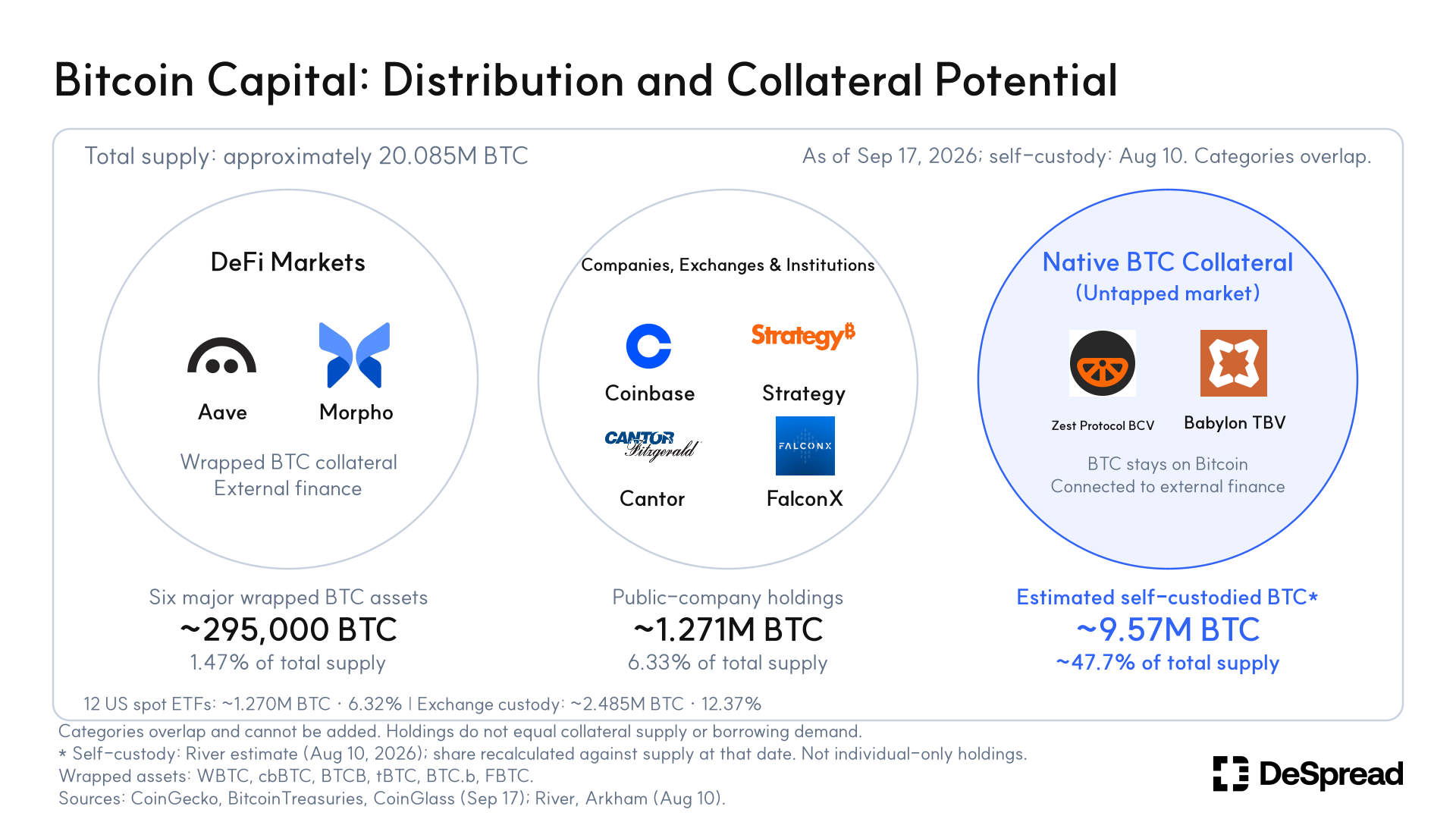
Wrapped BTC supplies collateral and liquidity to DeFi, while BTC held by companies and financial institutions supports lending and credit provision, showing that efforts to put Bitcoin to work as productive capital are already taking several forms.
As Bitcoin's uses in DeFi expand, onchain security threats are also growing. CertiK recorded 204 incidents involving code vulnerabilities in the first half of 2026, while Anthropic's research found that AI's ability to attack smart contracts had improved in simulated environments.
Even so, the Coinbase and Morpho example discussed earlier shows that interest in and demand for onchain finance continue. Yet broader financial use does not change the fact that users are exposed to the security risks of external chains and smart contracts. Adding trust in a centralized institution's management capabilities alone is unlikely to persuade holders who require stricter custody and security conditions. To bring these holders in, the structure itself must limit the pathways through which vulnerabilities in external smart contracts can lead to unauthorized outflows of collateral.
Against this backdrop, native BTC collateral offers another attractive option. Bitcoin's limited scripting narrows the range of possible computations and state changes, reducing the attack surface that can arise when complex functions are combined. Coupled with a design that restricts collateral payouts to predefined repayment and liquidation transactions, this can prevent errors in external financial contracts from leading directly to unauthorized BTC outflows.
Keeping the custody and final settlement of BTC collateral on Bitcoin's main chain is a major strength. Although trust assumptions for external lending contracts and state verification remain, this approach reduces reliance on a separate L2's custody and settlement arrangements while drawing directly on the Bitcoin network's security budget for transaction finality. Technologies that lower the barriers to financial use while retaining Bitcoin's security foundation could turn substantial BTC holdings previously kept in storage into a new source of collateral, expanding the Bitcoin lending market.
Moreover, if more capital accumulates in Bitcoin, more companies add BTC to their balance sheets, and the legal and institutional framework for its financial use develops, the pool of capital that native BTC collateral can connect to financial markets could grow further.
How far these changes will translate into actual collateral provision and borrowing remains to be seen. Nevertheless, this market clearly warrants attention: meeting holders' strict custody and security requirements could bring substantial BTC capital into financial markets for the first time.
Native BTC collateral products targeting this demand have only just entered the early stages of testing. Babylon has developed Trustless Bitcoin Vaults (TBV), which hold BTC in vaults on Bitcoin and link the collateral state to external lending markets, and is testing the structure on a public testnet integrated with Aave v4.
Zest Protocol has also introduced Bitcoin Collateral Vaults (BCV) through a public mainnet demo, enabling users to borrow stablecoins on an external chain while keeping BTC on Bitcoin. With plans to extend this collateral connection to a range of financial applications, Zest Protocol has begun defining itself as a “capital layer for Bitcoin.”
2.1. The Capital Layer for Bitcoin That Zest Protocol Aims to Build
Zest Protocol targets holders who want to put the value of their BTC to financial use while keeping it on Bitcoin's main chain. Its strategy is to connect BTC's collateral value to a range of financial applications while the actual BTC remains on Bitcoin; the public BCV mainnet demo allows users to borrow USDC on an external chain against BTC.
BCV is designed to keep BTC on the main chain while putting its collateral value to use in EVM markets that already have liquidity and lending infrastructure. To achieve this, it restricts BTC payout destinations in advance and executes predefined transactions according to the repayment and liquidation conditions of external loans.
Starting with collateralized lending, BCV plans to expand into curating investment strategies for borrowed funds and automating custodians' existing lending operations. Under the strategy curation model, users deposit BTC and a curator manages both borrowing against it and investing the borrowed funds, paying out the investment returns in BTC or stablecoins. If these services are implemented, BCV could serve holders who want to delegate the management of their BTC as well as those seeking to borrow directly.
Meanwhile, Zest Protocol has been building a lending protocol on Stacks since the early formation of the Bitcoin L2 ecosystem. Stacks is a Bitcoin L2 that draws on Bitcoin's security by anchoring the finality of its transaction history to Bitcoin, and Zest Protocol first built financial infrastructure on it to support deposits and borrowing of BTC-based assets. It therefore targets both demand to deploy BTC-based assets within an L2 through Stacks and demand to obtain liquidity while keeping BTC on Bitcoin Layer 1 (L1) through BCV.
Zest Protocol thus aims to retain the financial infrastructure it has built on Stacks while expanding through BCV into native BTC collateral and related investment services. This report examines how BCV, at the center of that expansion, connects Bitcoin custody with financial use, considering both its technical structure and market potential.
3. BCV's Technical Structure and BitVM Verification
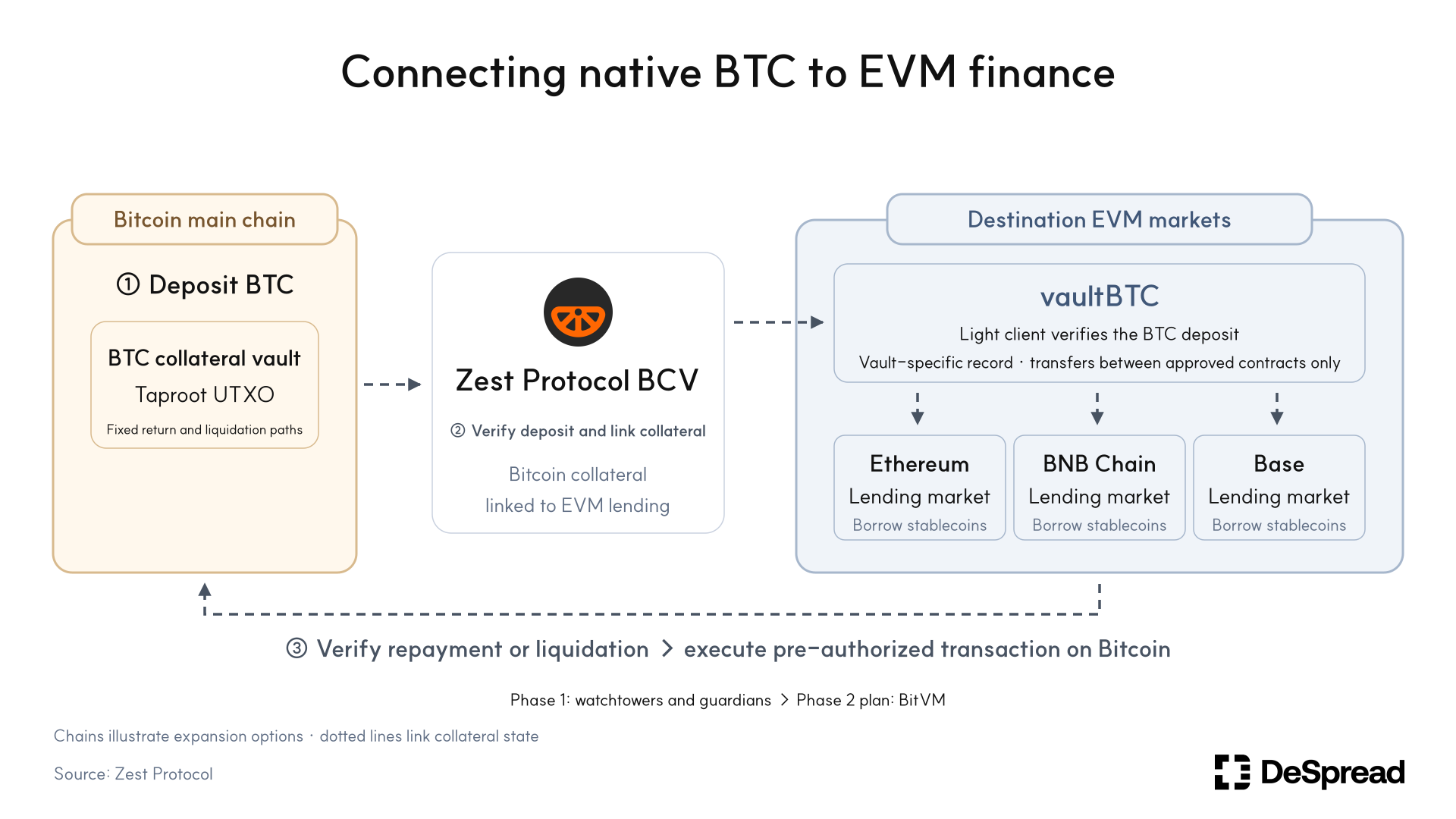
BCV is the native BTC collateral product that Zest Protocol introduced through a public mainnet demo, connecting actual BTC collateral with USDC borrowing. Users hold BTC in Taproot vaults on Bitcoin and can borrow stablecoins in EVM lending markets through vaultBTC, which represents the state of that collateral. Capital suppliers in those markets provide the stablecoins used for lending and receive the interest paid by borrowers.
In the production design, a Bitcoin light client checks transaction inclusion and the required block confirmations for the vault UTXO, while the minting module verifies the output's configuration and its link to the beneficiary before authorizing vaultBTC issuance. The resulting vaultBTC serves as a record of a specific vault's collateral state for lending contracts; transfers are restricted to permitted protocol contracts, so it does not circulate freely like ordinary wrapped BTC. Its role is to let external lending markets verify and use collateral that remains on Bitcoin.
BCV thus divides the roles between the two chains: custody and settlement of BTC collateral take place on Bitcoin L1, while the supply and borrowing of loan funds take place on an external chain. Connecting the two requires a way to verify whether an external loan's repayment or liquidation conditions have been met and to reflect that result in BTC settlement.
In Phase 2, Zest Protocol aims to perform this verification through BitVM. The plan is to retain the basic connection between vaults and loans while changing how the protocol verifies whether a settlement is valid.
Ahead of that transition, the current Phase 1 manages collateral through pre-signed transactions, watchtowers, and a Guardian Council. Watchtowers publish the state of external loans, while guardians challenge improper settlements.
3.1. Restricting Collateral Transfers to Pre-approved Addresses
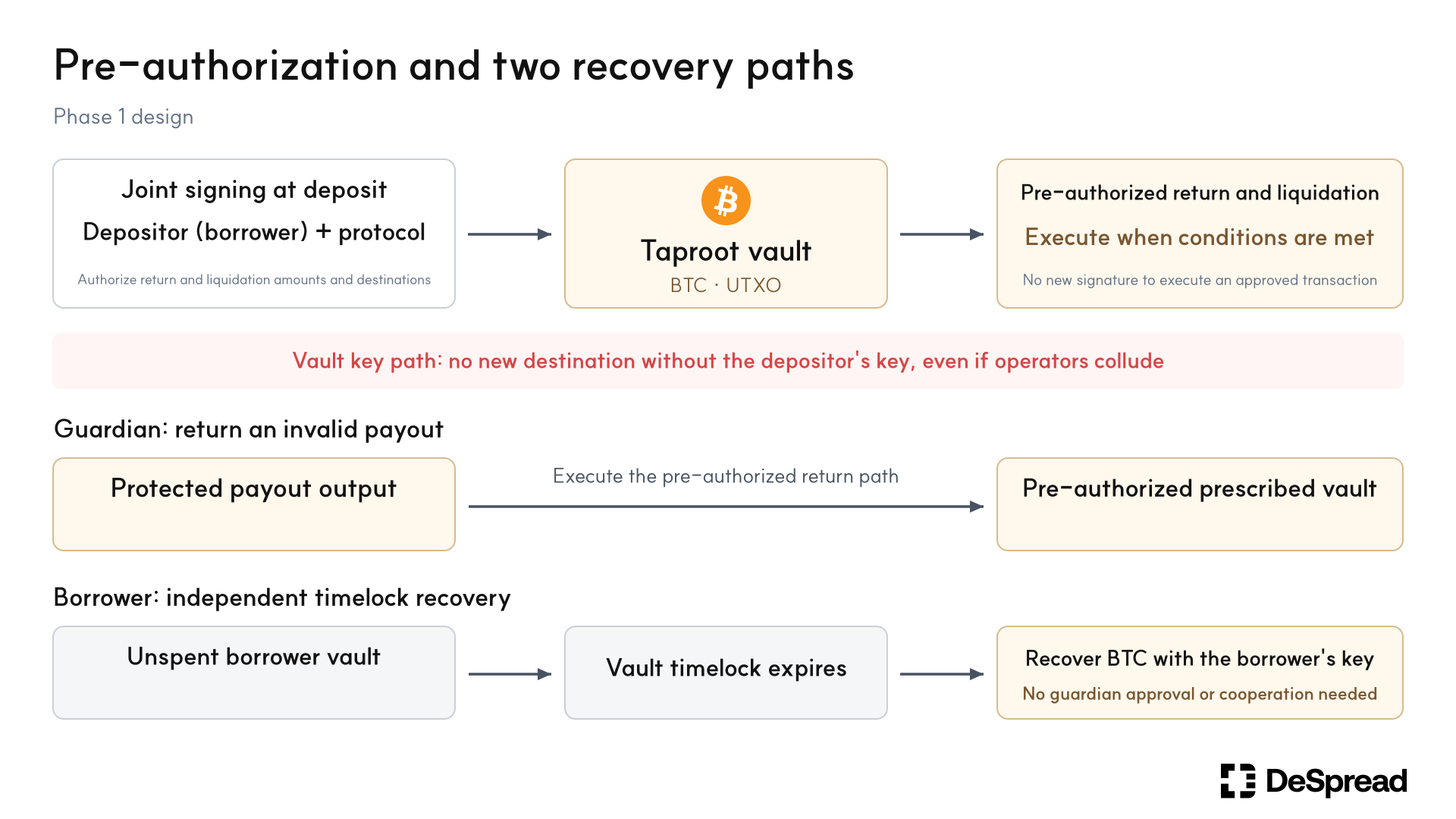
Bitcoin prioritizes security by using a scripting language that deliberately limits the functions it can execute. Although this restricts the complex financial products that can be built on Bitcoin, the same constraints can be an advantage when the aim is to hold collateral securely. The simpler the rules governing a transaction, the easier its behavior is to predict and verify. BCV combines these constraints with co-signing and pre-approved transactions to prevent arbitrary changes to the addresses that can receive collateral.
When depositing BTC as collateral, borrowers co-sign return and liquidation transactions with the protocol in advance, fixing each transaction's amount and destination at that point. To prevent operators from arbitrarily changing these pre-approved terms, Zest Protocol requires both the borrower's and the protocol's keys in the vault's key path. Even if operators collude, they therefore cannot create a transaction to send funds to a new destination without the borrower's key. Previously approved return and liquidation transactions can execute once their conditions are met, without another signature from the borrower. Guardians, meanwhile, use a separate return path when responding to an improper payout. This sends BTC from a protected payout output subject to pre-approved return conditions back to a designated vault, and guardians likewise cannot arbitrarily change the return destination.
Alongside restrictions on collateral payout destinations, BCV provides a path for borrowers to recover BTC without the protocol's cooperation. If BTC remains unspent in a vault to which the independent recovery path applies, the borrower can recover it after that output's timelock expires. This requires the borrower's existing Bitcoin key and public vault information, without cooperation from guardians or the protocol. The path is separate from the ordinary release of collateral after repayment, and recovering the BTC does not itself repay the debt on the external chain.
BCV therefore prevents operators from arbitrarily changing collateral payout destinations while also providing a path for borrowers to recover BTC themselves under specified conditions. Pre-signing and destination restrictions reduce the pathways through which problems in external systems can spread to unauthorized collateral outflows, while independent timelock recovery allows borrowers to retrieve BTC without relying on the protocol or guardians. The design lets borrowers use a lending service without leaving collateral transfers and recovery entirely to operators' discretion.
Restricting where collateral can be sent and verifying whether liquidation conditions have actually been met are, however, separate questions. Zest Protocol plans to introduce BitVM for the latter in Phase 2.
3.2. Verifying External Loan State with BitVM
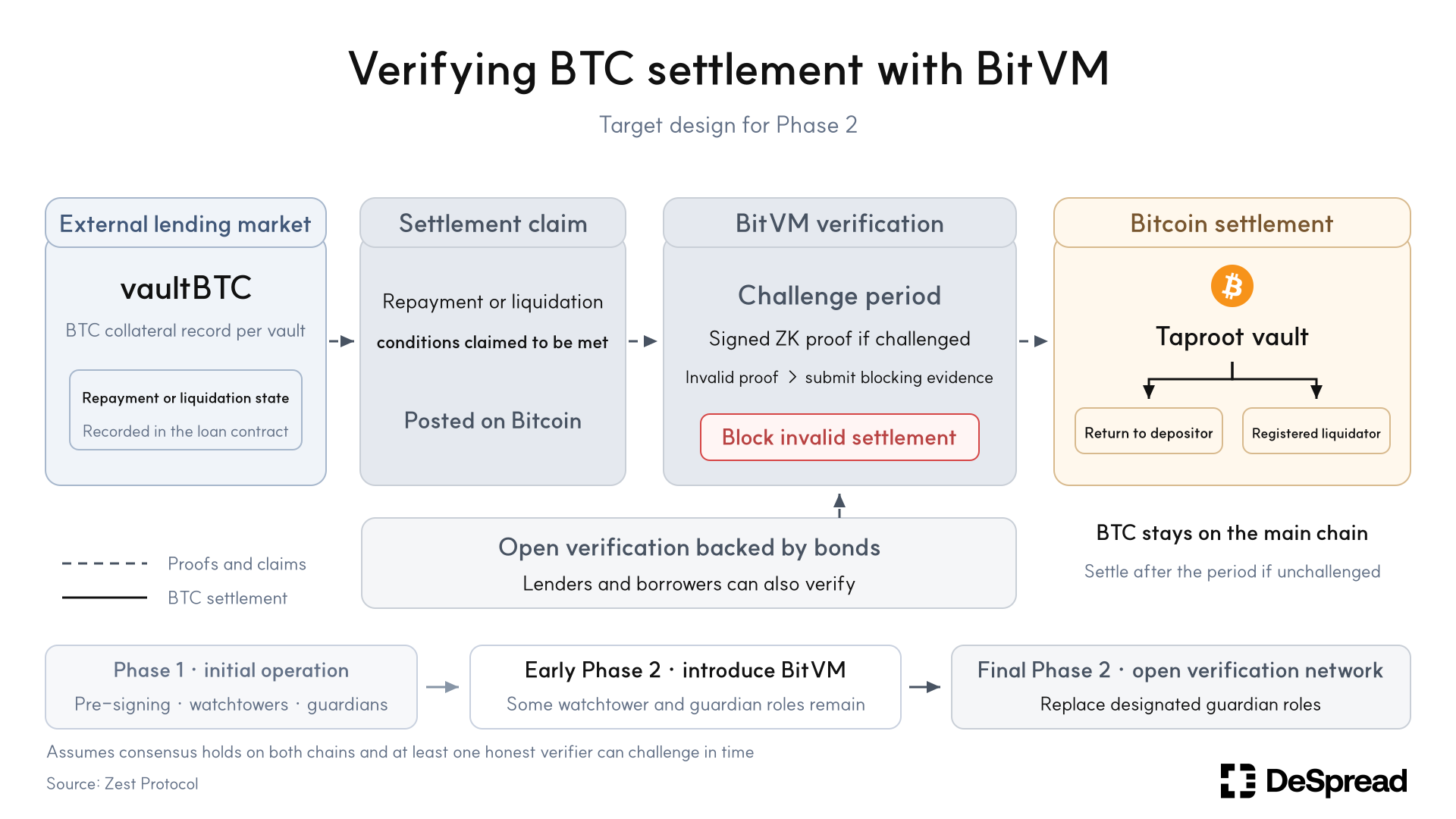
The verification approach Zest Protocol is pursuing for Phase 2 begins with the publication of a settlement claim and allows incorrect claims to be challenged. Once a Bitcoin transaction claiming that a loan has been repaid or liquidation conditions have been met is published, other participants have time to verify it; settlement completes if the specified period passes without a challenge. If a dispute arises, however, the claimant must present a signed zero-knowledge proof of the external loan state.
The planned challenge mechanism allows a verifier to demonstrate that a settlement claim is invalid and use Bitcoin-enforced rules to block the improper payout. This allows the evidence needed to prevent an incorrect settlement to be verified on Bitcoin without running the entire external lending contract there.
The transition is planned to proceed gradually as the proof system and operational tools mature. Once BitVM verification takes over the assessment of liquidation validity in Phase 2, watchtowers will handle co-signing and transaction updates, while guardians will step back from reviewing liquidations to focus on return challenges and protecting the proof system. Their involvement is intended to shrink as the verification system becomes more stable.
The eventual plan is to open participation so that anyone can post a bond and operate a verification node. Capital suppliers could monitor the funds they supplied and borrowers could monitor their own collateral, with both able to challenge improper settlements, extending verification from designated institutions to a network open to public participation.
BitVM's challenge-based verification does, however, require at least one honest verifier to be able to challenge an incorrect claim within the specified period. BCV is likewise designed to move from reliance on designated institutions toward open participation, subject to this condition and the assumption that consensus on Bitcoin and the destination chain is maintained.
3.3. Settling Only the Required Collateral and Keeping the Rest
Rather than deducting small amounts from an account balance, Bitcoin creates transactions by consuming UTXOs, individual records of unspent amounts. Much like handing over a banknote and receiving change, it consumes an existing UTXO in full and creates new outputs for the amount to be paid and the amount to be retained. Supporting partial liquidation therefore requires a design that can pay out the required amount and keep the remainder as collateral in a single transaction.
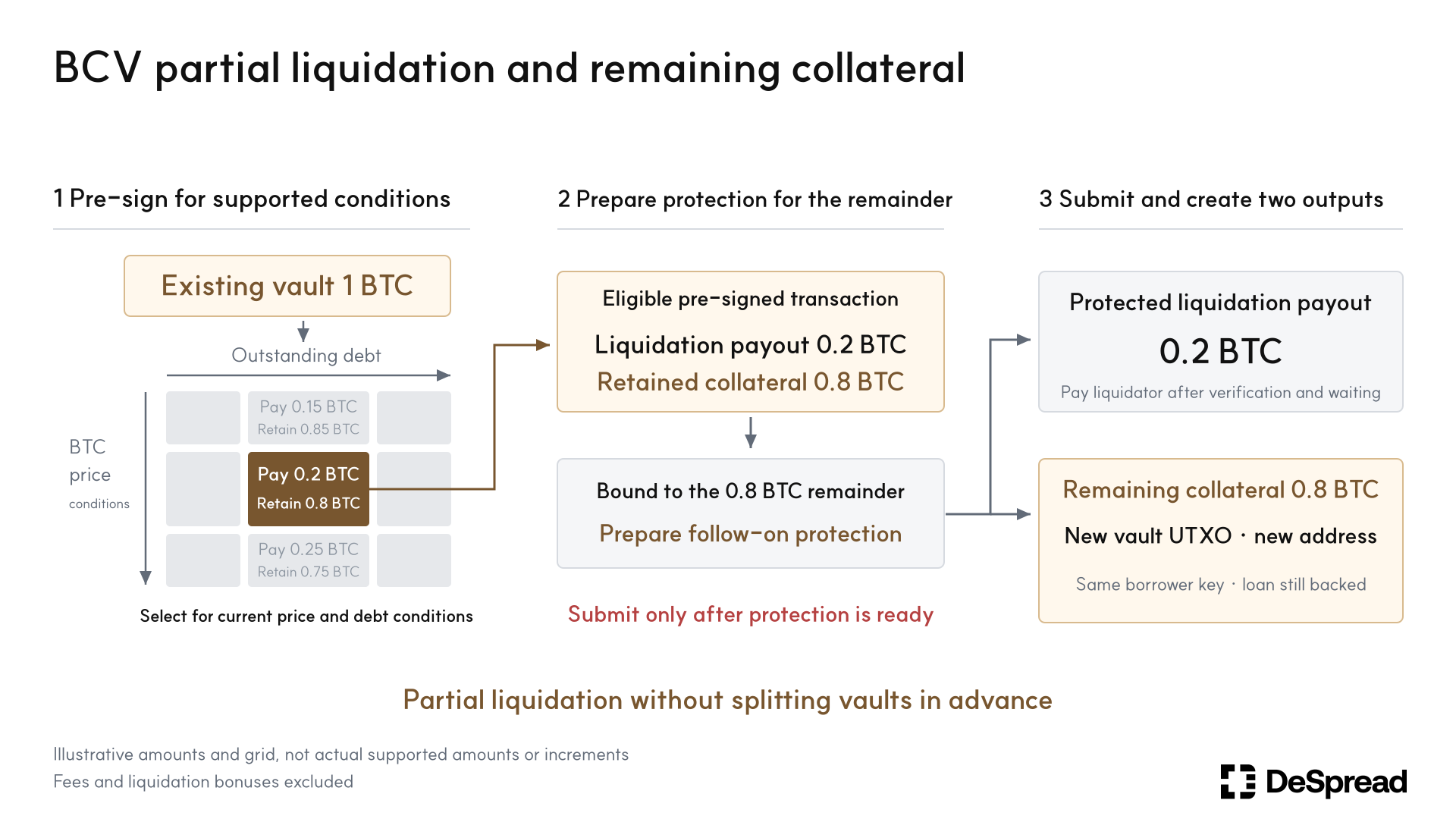
Rather than splitting collateral into separate holdings in advance, BCV has the borrower pre-sign transactions that fix the liquidation payout and remaining collateral for supported combinations of BTC price and outstanding debt. This set of transactions is the liquidation grid.
The diagram above gives three illustrative transactions for the same 1 BTC: “pay 0.15 BTC and retain 0.85 BTC,” “pay 0.2 BTC and retain 0.8 BTC,” and “pay 0.25 BTC and retain 0.75 BTC.” The amounts and destinations in each cell are fixed in advance, and the transaction matching the current BTC price and outstanding debt is selected. The selected transaction can execute without an additional borrower signature, but the liquidator still cannot arbitrarily change its amounts or destinations. Even as the BTC price or debt changes, an existing transaction matching the conditions can be selected within the pre-approved range. New approval is needed only if those changes take the conditions outside that range.
Before a liquidation transaction matching the conditions can execute, protection must also be in place for the collateral it will leave behind. In the diagram's 0.2 BTC payout transaction, the remaining 0.8 BTC will still secure the outstanding loan and must therefore be able to support a subsequent liquidation. Zest Protocol's design requires follow-on protection transactions linked to the exact remaining UTXO that this transaction will create to be prepared first, and permits the liquidation transaction to be broadcast to the Bitcoin network only once that preparation is complete.
When the transaction executes, the existing 1 BTC UTXO is consumed, creating a liquidation payout output and a new collateral vault. In this example, which excludes fees and liquidation bonuses, the 0.2 BTC is held in a protected payout output during verification and the waiting period before being released to the liquidator, while the 0.8 BTC remains in a vault at a new address. Although the address changes, the BTC continues as collateral for the remaining loan under the same borrower key, allowing partial liquidation without splitting the deposit across multiple vaults at the outset.
For a partial withdrawal, the borrower similarly approves both the withdrawal transaction and the protection conditions for the collateral it will leave behind. Some BTC can therefore be recovered within the loan and transaction requirements while the remaining collateral continues to back the loan.
3.4. Flash Settlement and Liquidation Liquidity
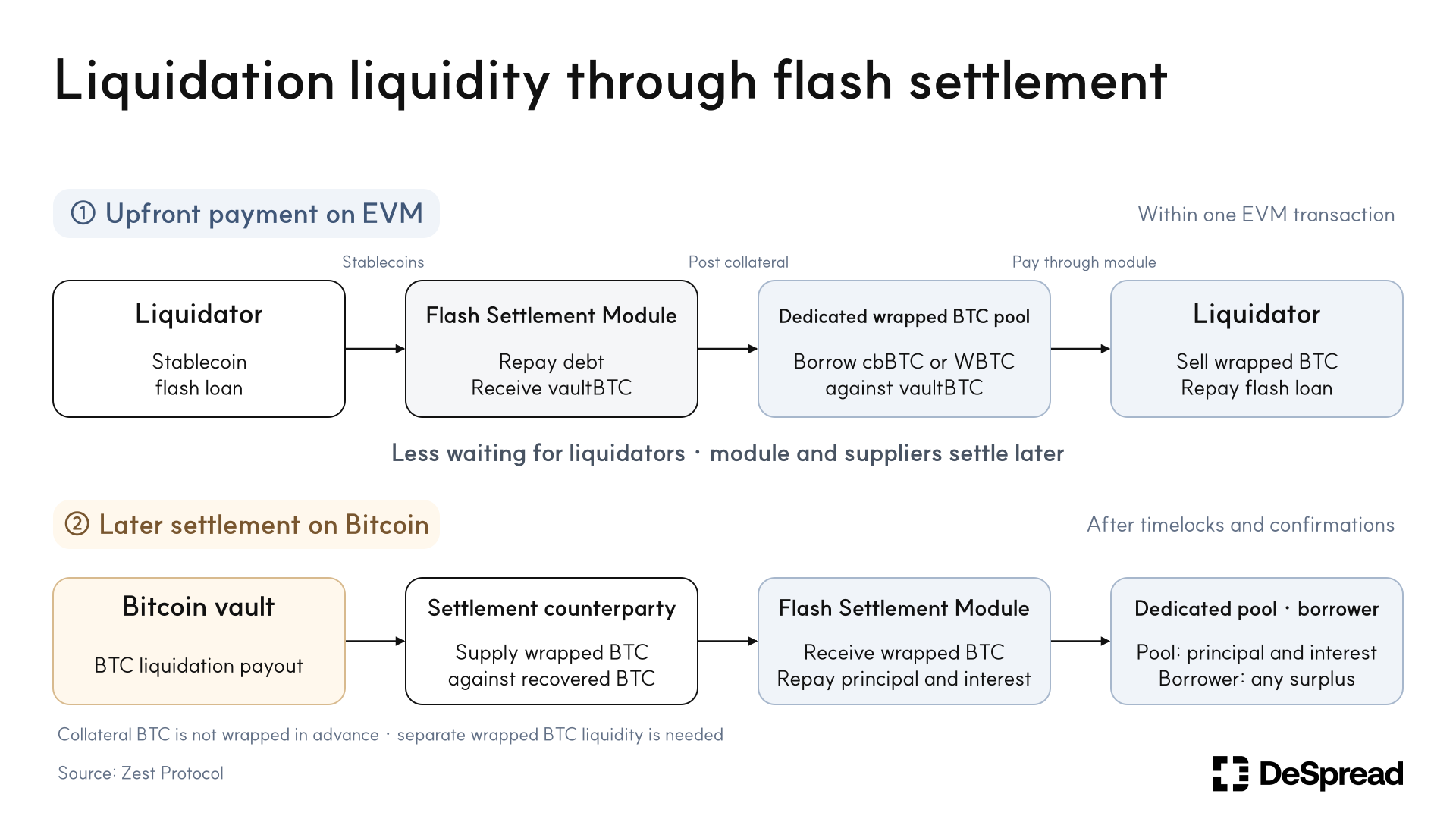
Connecting native BTC collateral to existing DeFi lending markets also requires addressing the difference in liquidation speed. If liquidators must wait hours or days to receive actual BTC after repaying the debt, their capital is tied up and exposed to price movements. The Flash Settlement Module included in Zest Protocol's production design bridges this gap by paying wrapped BTC first and settling the Bitcoin collateral afterward.
The module repays the debt using stablecoins raised by the liquidator through a flash loan and receives vaultBTC. The module then uses that vaultBTC as collateral to borrow cbBTC or WBTC from a dedicated pool and pay those tokens to the liquidator, who can sell them and repay the flash loan within the same EVM transaction. Later, once the settlement counterparty that received the actual BTC supplies wrapped BTC, the module repays the dedicated pool's principal and interest and returns any surplus to the borrower.
Paying liquidation proceeds on the EVM side first allows BCV liquidations to use flash loans, which require borrowing and repayment to be completed within a single transaction. Liquidators from existing EVM markets can participate using a familiar funding method, with less need to tie up their own capital until final settlement on Bitcoin. If broader participation allows liquidations to proceed smoothly with lower liquidation bonuses, borrowers could also lose less collateral to liquidation. The wrapped BTC pool supplying funds until the actual BTC is recovered, however, bears the risks of settlement delays and shortfalls, and Zest Protocol plans to introduce an insurance fund to address them.
4. BTC Collateral Design at Zest Protocol and Babylon
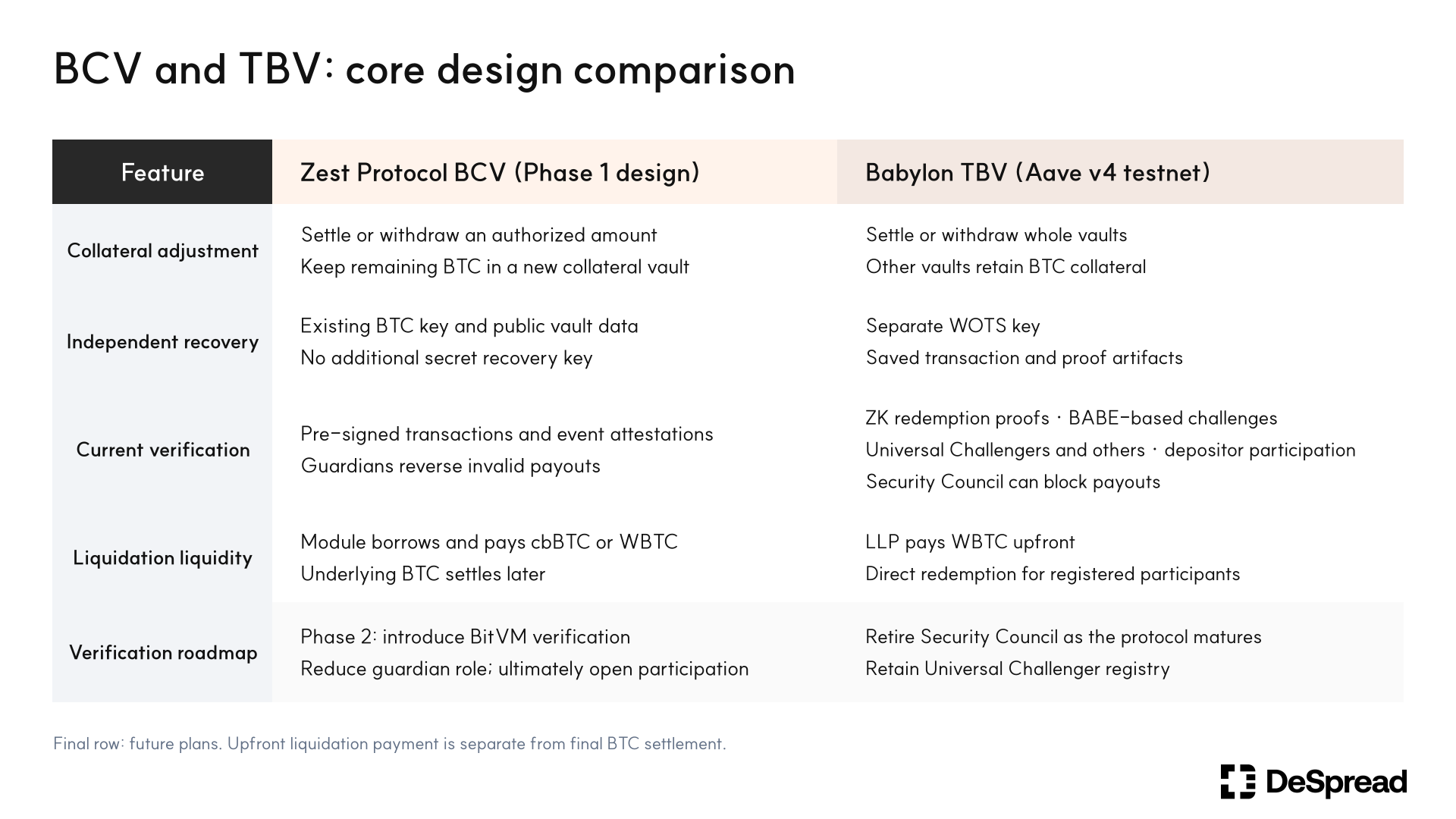
Both products are in the early stages of developing the native BTC collateral market. Zest Protocol has introduced a capacity-limited public mainnet demo using actual BTC and USDC, while Babylon is testing its Aave v4 integration on a public testnet.
Zest Protocol's BCV and Babylon's TBV both keep BTC on Bitcoin and settle collateral through predefined paths according to the state of external loans, but they differ in how they verify the validity of settlement. In Zest Protocol's current Phase 1, transactions pre-approved by the borrower execute on the basis of attestations about external state, while guardians are responsible for reversing improper payouts.
Babylon's public testnet uses a zero-knowledge proof to show that approval to redeem collateral has been finalized on Ethereum, and links that approval to Bitcoin's payout conditions through BABE. Developed through joint research by Babylon Labs and others, BABE combines witness encryption and garbled circuits and is designed to answer challenges using a secret that can only be obtained with a valid proof. The current testnet also includes a Security Council that can block payouts in an emergency.
Zest Protocol plans to verify settlement through BitVM in Phase 2 and gradually reduce the guardians' role. Babylon has likewise indicated its intention to remove its Security Council as the protocol matures.
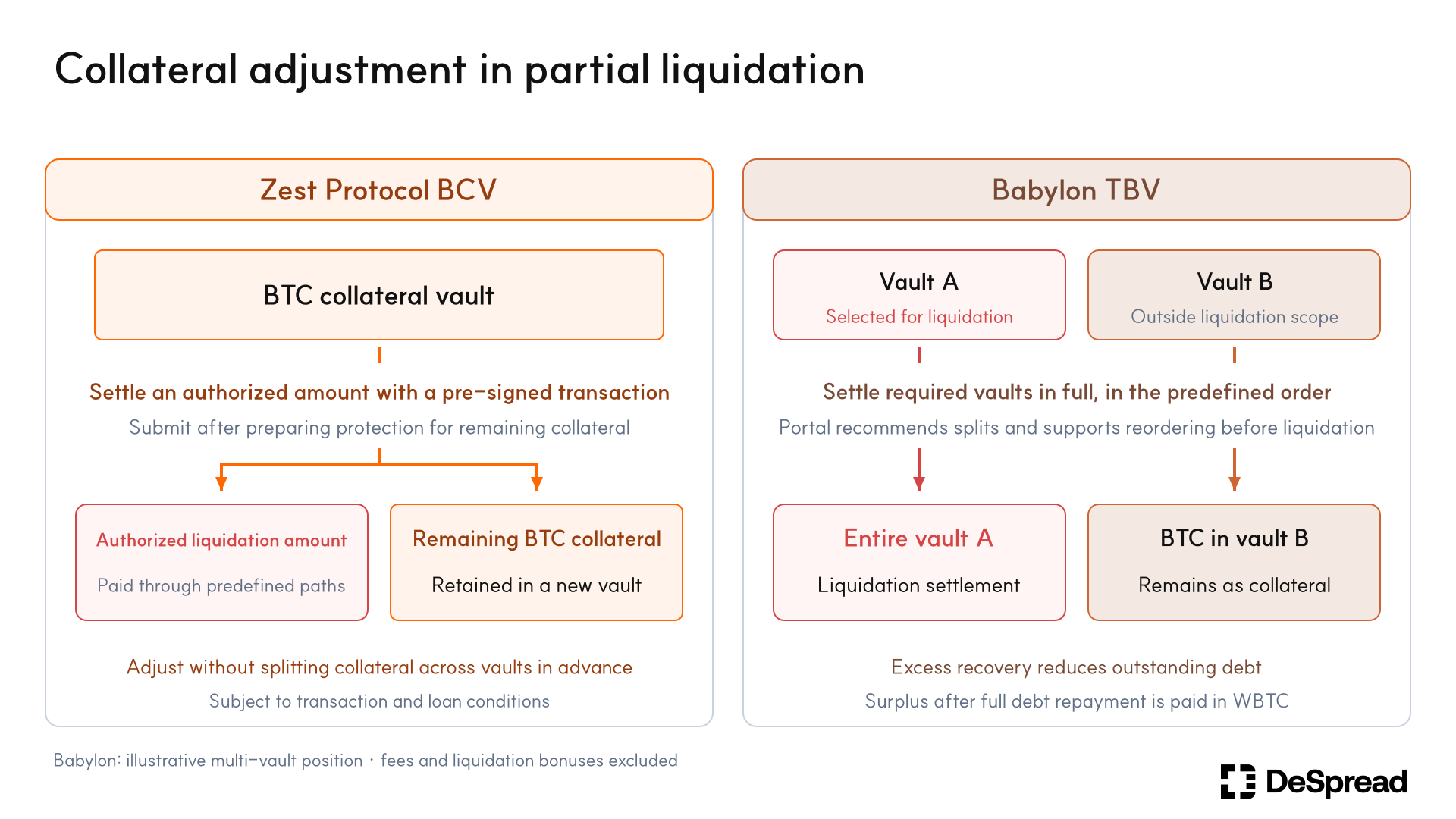
The two products also differ in how they handle UTXOs when settling collateral. Babylon settles the required vaults as whole units, in a specified order, while BTC in the remaining vaults stays as collateral. Excess proceeds calculated under the liquidation rules are used to reduce the remaining debt, and any amount left after the debt has been fully repaid is paid in WBTC. Zest Protocol, by contrast, is designed to settle a pre-approved amount from a single vault and carry the remaining BTC forward as collateral in a new vault. Being able to adjust the settlement amount without dividing collateral into vaults of different sizes in advance can reduce borrowers' collateral management burden.
This difference applies to voluntary withdrawals as well as liquidation. BCV allows eligible excess BTC to be withdrawn while the rest remains as native BTC collateral. Babylon also allows users to withdraw some vaults when loan conditions are met, and its portal recommends collateral split sizes and allows the vault order to be changed until liquidation begins. Its unit of adjustment, however, is an entire individual vault. The ability to adjust settlement and withdrawal amounts more precisely within the permitted range while carrying the remaining BTC forward as collateral can therefore be considered an operational strength of BCV.
Beyond collateral adjustment, the preparations for independent recovery also differ. Babylon's path for recovering BTC without the vault provider's cooperation uses a WOTS key that must be stored separately, while Zest Protocol's BCV uses the borrower's existing Bitcoin key. BCV users must still obtain the public vault information needed for recovery, but they benefit from not having to manage an additional secret recovery key.
When choosing a product, however, users must consider fees, liquidation terms, settlement liquidity, and other factors affecting the actual cost of use alongside operational convenience. Ultimately, how the two projects design and manage these conditions is likely to be an important determinant of their competitive advantage in the market.
5. The Pursuit of a Capital Layer for Bitcoin
5.1. An Expansion Strategy Spanning L1 and L2
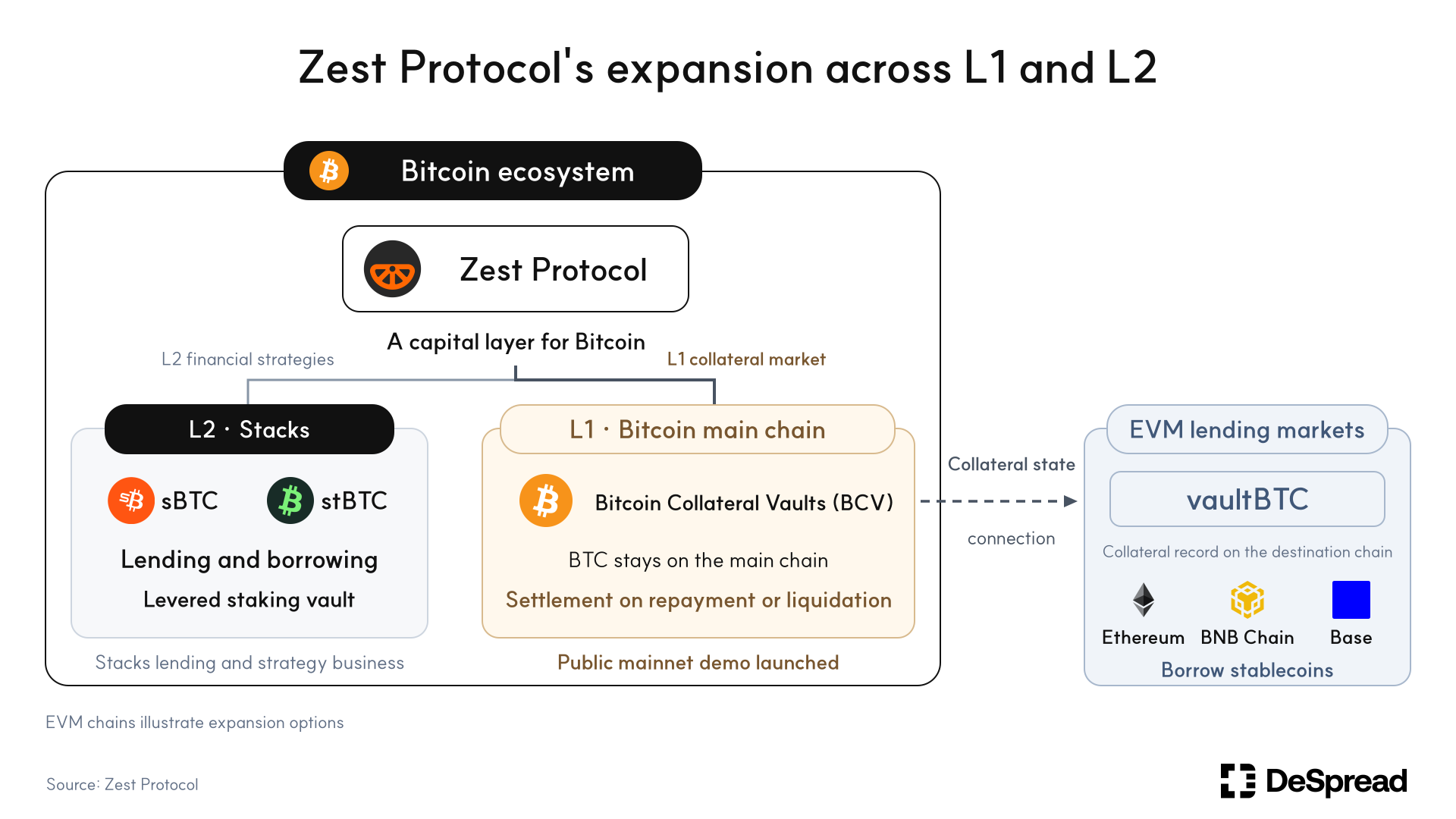
What draws my attention in Zest Protocol's stated vision of a “capital layer for Bitcoin” is that it targets Bitcoin L1 and L2 together. People differ in how they hold BTC and the risks they are willing to take for additional returns. Holders who prioritize custody conditions and security may choose products that provide liquidity against BTC on the main chain, while those seeking a wider range of strategies, such as synthetic assets or leveraged investing, need a smart contract environment that can combine financial contracts. The products they choose and the returns they pursue therefore depend on how extensively they want to put their assets to work.
Zest Protocol's recently developed Bitcoin staking vault is a case in point. Staking sBTC with Stacking DAO produces stBTC, and as rewards accrue, the amount of sBTC redeemable through stBTC increases. Zest Protocol's vault offers a looping product that borrows sBTC against this stBTC, then stakes the borrowed sBTC to obtain more stBTC. Through looping, users can pursue a return of approximately 6% to 8%, compared with stBTC's target net yield of around 2.6%.
L2s thus broaden Bitcoin's potential to generate returns through leveraged strategies, synthetic asset design, and combinations of DeFi products. Technical efforts to increase processing capacity using zero-knowledge proofs or add privacy features are also continuing. By accommodating both financial demand that the main chain alone struggles to meet and demand for new functionality, L2s have a distinct role and market of their own.
5.2. The Value of an Established Bitcoin L2 Base
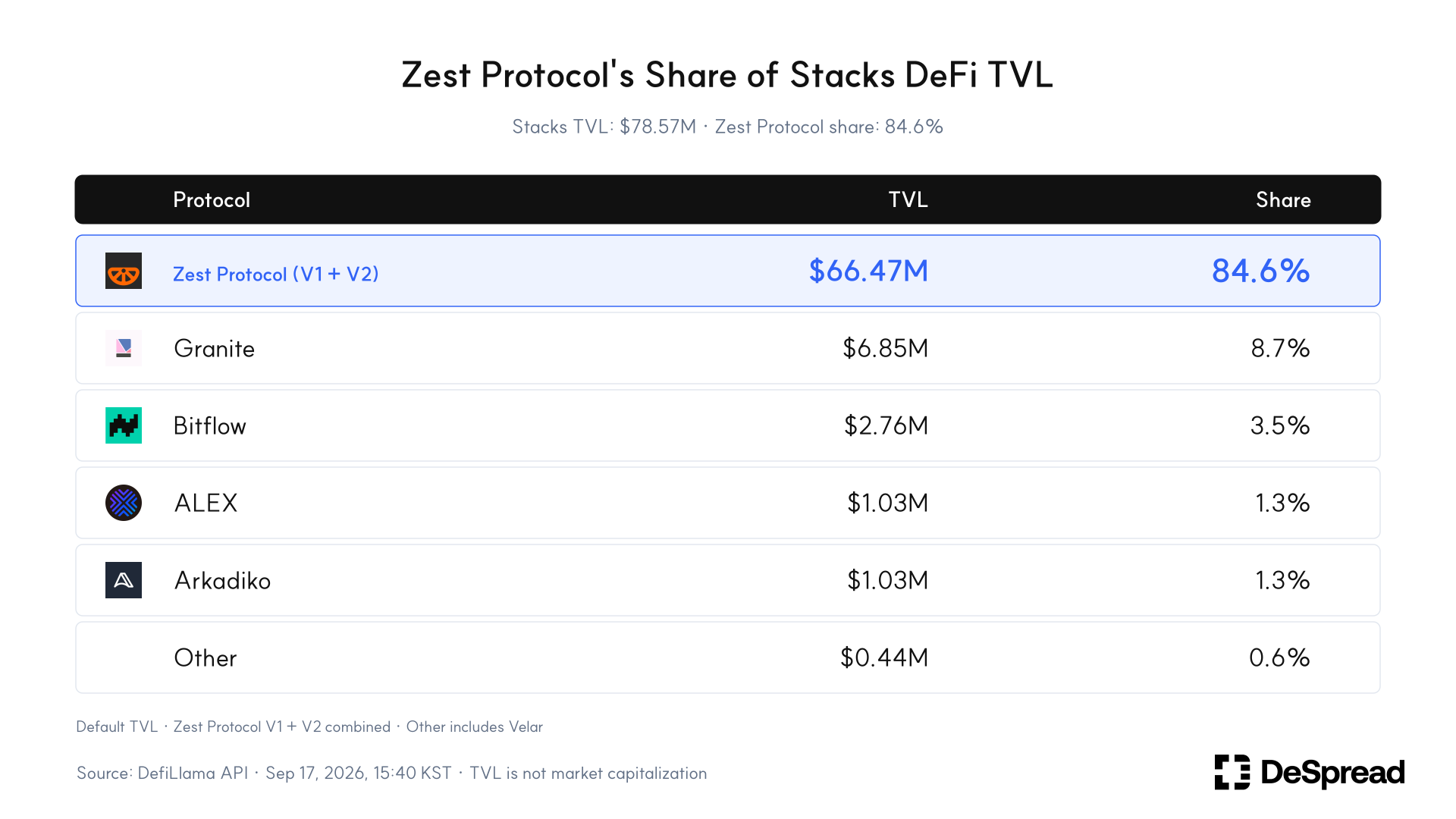
Through years of contributions to Stacks' technical development and financial ecosystem, including work on sBTC and the Nakamoto upgrade, Zest Protocol has established itself as a lending application central to the ecosystem's liquidity. According to DefiLlama, Zest Protocol accounts for approximately 84.6% of Stacks' total value locked (TVL).
Against this background, Zest Protocol currently offers deposits and borrowing of BTC-based assets as well as automated investment products on Stacks, and also runs a liquidity incentive program with support from the Stacks Endowment. With an established place in the Stacks ecosystem, it is seeking to expand its business into the new market for native BTC collateral through BCV. The significance of Zest Protocol's current share of the Stacks market becomes more interesting when considered alongside Stacks' position in the Bitcoin L2 sector.
5.3. Stacks' Position as the Bitcoin L2 Market Changes
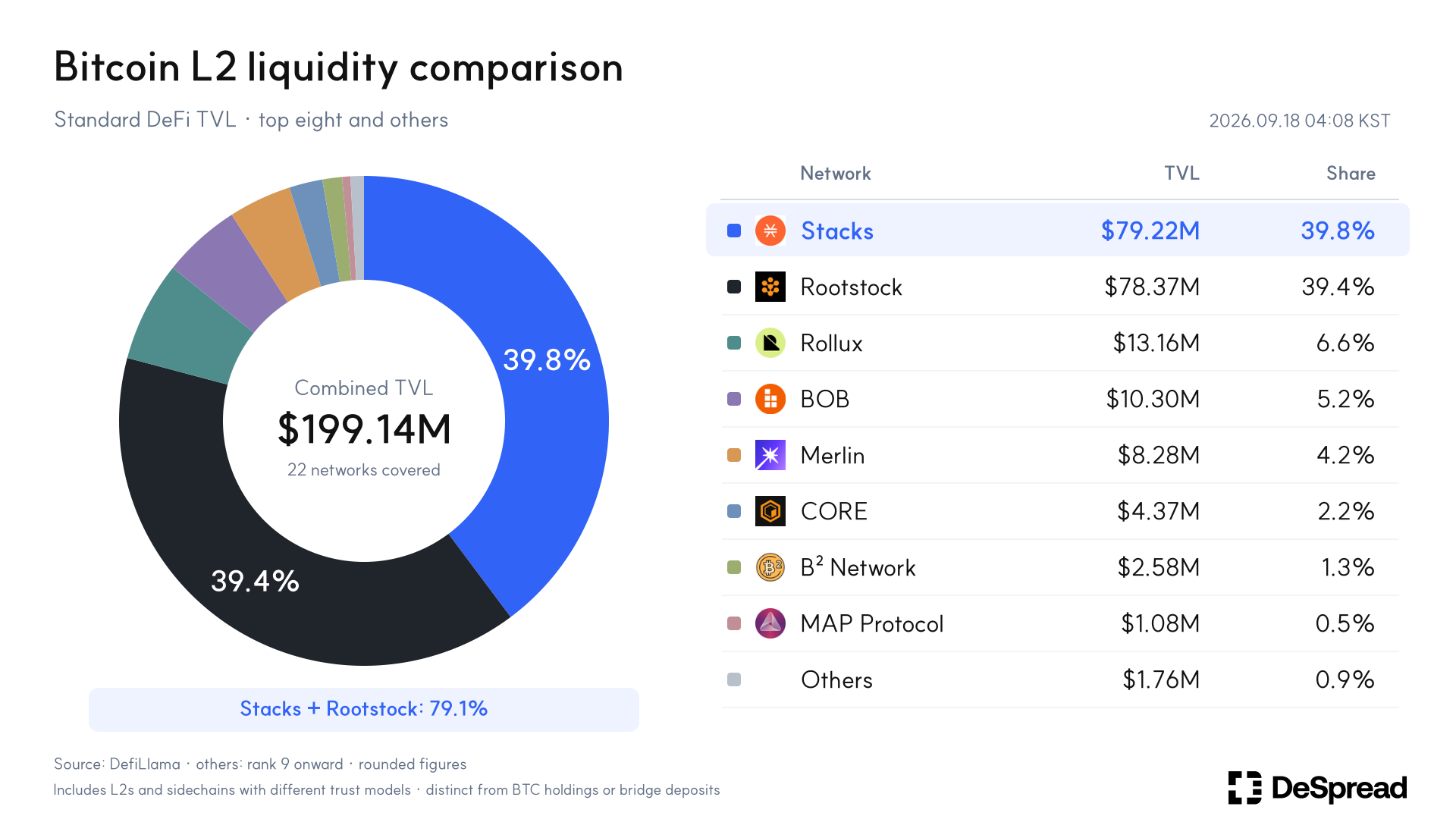
The last cycle brought a wave of projects seeking to expand Bitcoin's uses, including Merlin, B² Network, BOB, Bitlayer, and Core. Yet many of these newer entrants are struggling to establish themselves, with TVL on Core, Merlin, and Bitlayer, among others, falling sharply from its peaks. Botanix, another Bitcoin L2 project that had raised $11.5 million, even announced the shutdown of its mainnet in June 2026.
Supply pressure from remaining token vesting after issuance, limited confidence in the security of chains with short operating histories, and underdeveloped applications and liquidity may all play a role, and each project will have its own circumstances, but the newer entrants from the last cycle do appear to be struggling to turn early expectations into a sustainable market.
By contrast, Stacks and Rootstock, which began pursuing Bitcoin scaling early on, still maintain relatively large ecosystems and liquidity bases, together accounting for about 79.1% of the TVL of the chains compared above. Although Stacks has also experienced a substantial market correction, it has remained a major part of the Bitcoin L2 market amid the difficulties of newer entrants, demonstrating its relative competitiveness.
With TVL and token prices on major Bitcoin L2 networks far below their peaks, the market's contraction is clear. I believe it is still too early, however, to interpret this as the disappearance of demand to expand Bitcoin's uses. Efforts to put substantial BTC capital to work continue, while the main chain's limited scripting restricts the products and functions that can be built. Given the gap between the scale and appeal of that capital and the technology available to use it, development and business efforts to bridge the gap are likely to continue.
On the financial side, expansion could involve investment strategies combining several DeFi functions, such as Zest Protocol's stBTC looping product, or the design of more complex financial products, such as Bitcoin-backed bonds.
On the technical side, efforts also continue to add new functions to Bitcoin, including stronger privacy and verification using zero-knowledge proofs. Starknet has proposed building an L2 that brings zero-knowledge proof technology to Bitcoin, while Stacks announced plans to introduce privacy features in its official 2026 roadmap.
If these financial and technical efforts continue and L2s attract renewed attention, the established position Zest Protocol has built within the Stacks ecosystem could become an important advantage. It would be able to draw on products already in operation and an accumulated liquidity base to meet new financial demand.
5.4. Expertise Built Through Bitcoin Development

Zest Protocol co-founder Tycho Onnasch worked in business development at Bitcoin application developer Trust Machines, connecting staking providers and custodians to the Stacks ecosystem. He has focused on Bitcoin as a financial asset, including in his current role as Head of Bitcoin Strategy at the Dutch Bitcoin treasury company Treasury, where he develops strategies for corporate BTC holdings and management.
Fellow co-founder and Chief Technology Officer Emil E. has built experience in technologies connecting Bitcoin to other systems and in smart contract security. The technical team he leads contributed to sBTC, which connects BTC to financial applications on Stacks, while Emil also helped establish security auditing practices for smart contracts written in Clarity, the development language of the Bitcoin L2 Stacks.
The combination of Tycho's business and asset management experience with Emil's development and security expertise suggests that Zest Protocol's founders have a broad understanding of both the business and technical dimensions of the Bitcoin market.
5.5. Funding and Major Investors
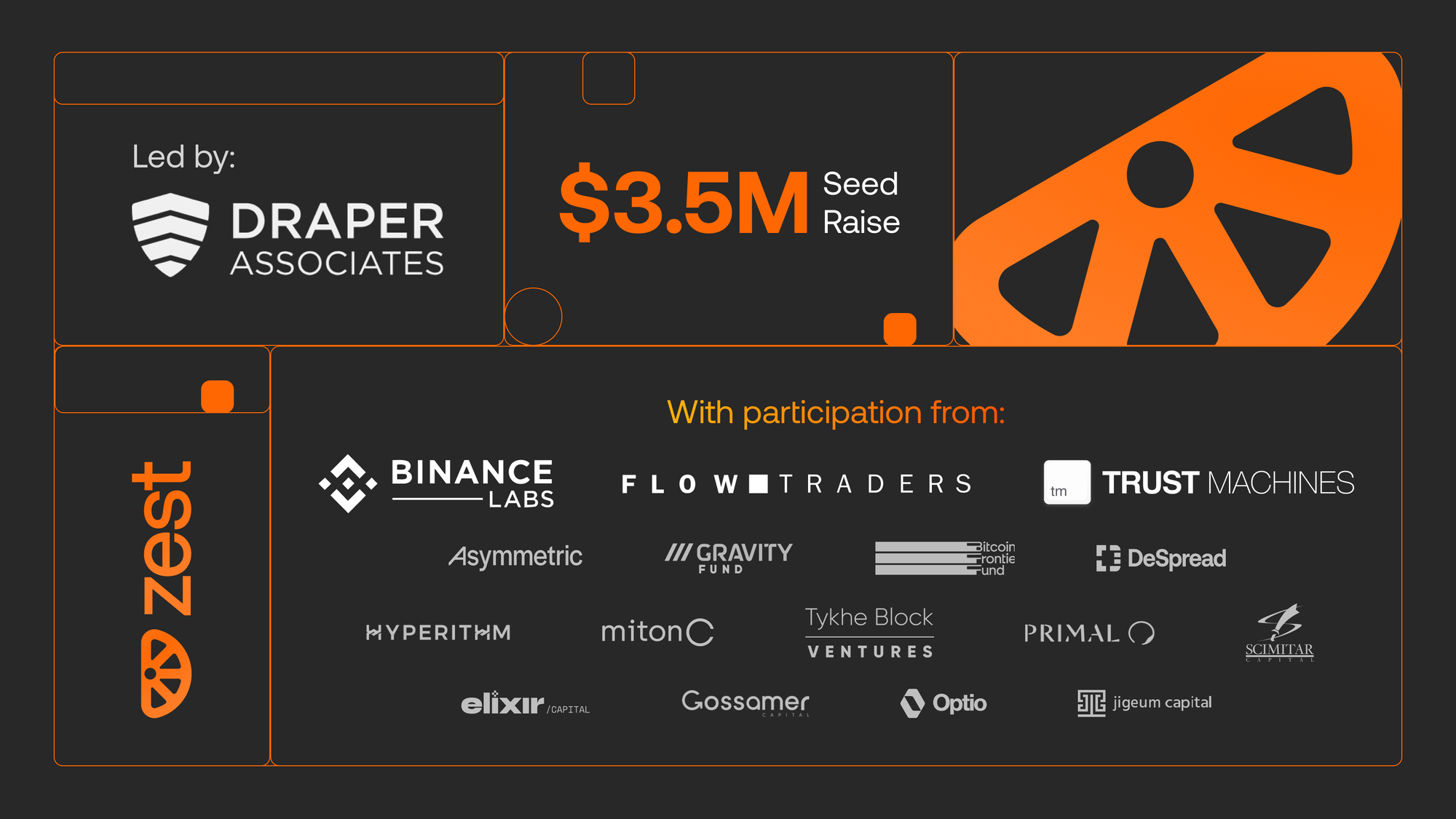
In May 2024, Zest Protocol raised $3.5 million in a seed round led by Draper Associates, with participation from Binance Labs and others.
Draper Associates founder Tim Draper is widely known as an investor who recognized the growth potential of technology companies early, backing businesses including Tesla, SpaceX, Coinbase, and Robinhood. He is also a Bitcoin maximalist who took an early interest in Bitcoin and purchased approximately 30,000 BTC at a U.S. government auction in 2014.
When investing in Zest Protocol, he said, “I don’t want to just hold BTC - I want to use it! I’ve [run] many experiments to deploy BTC productively, but it hasn’t been easy.” As both a BTC holder and an investor, he has personally experienced the need to manage his assets more flexibly. His resulting understanding of demand for Bitcoin finance, together with his standing in the industry, could help Zest Protocol make a more persuasive case to the market for the need for its financial products.
YZi Labs, renamed from Binance Labs in 2025, continues to support early-stage projects after its restructuring as an independent investment organization, drawing on the network and business development capabilities built within the exchange ecosystem. With this foundation, YZi Labs is a strong Web3 venture-building partner that can help Zest Protocol find businesses to collaborate with and establish its products in the market.
With investors who collectively bring an understanding of Bitcoin's financial uses and experience in developing Web3 businesses, Zest Protocol can be considered to have a solid investor base to support its expansion.
6. Conclusion
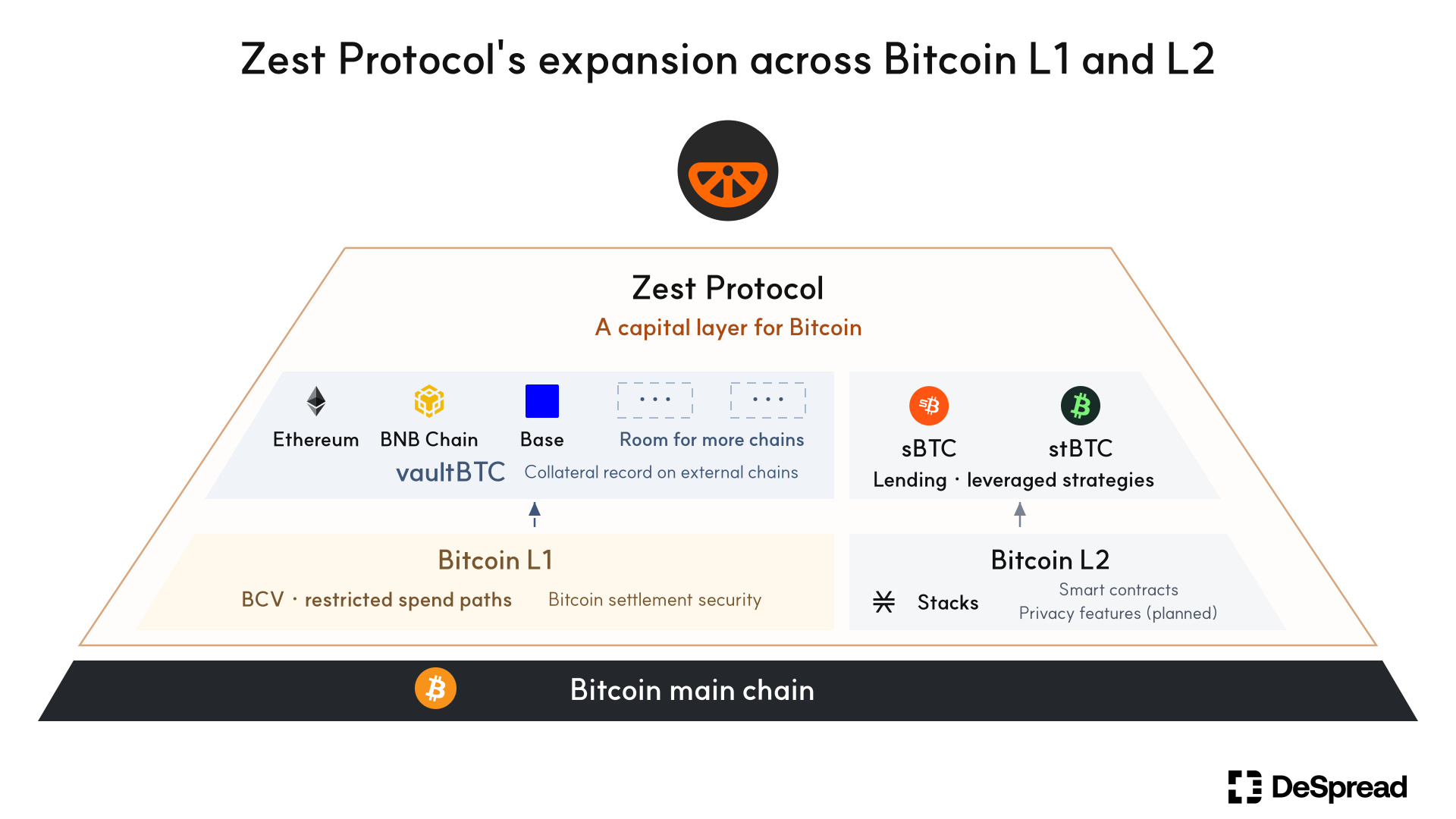
What interests me over the long term is the Bitcoin capital that would become active once financial uses are available under stricter custody and security conditions. Demand for returns and liquidity without selling assets is not confined to large institutions.
If custody and security conditions can meet the requirements of individuals and companies accumulating BTC for the long term, a path opens for substantial BTC capital previously excluded from financial use to become a new source of collateral. As Bitcoin comes to serve as digital collateral alongside digital gold, new business opportunities emerge to connect capital that existing financial markets have not fully put to use.
If financial uses develop further into services that manage borrowing and investment together or automate custodians' lending operations, the investment and financial service markets that arise on top could expand the potential business opportunity further.
Financial visions and investments recognizing this potential are already emerging. Michael Saylor has outlined a future in which Bitcoin becomes the “base collateral and capital asset” of a modern financial system, with credit and income products built on top. In January 2026, a16z crypto also announced a $15 million investment in Babylon, saying that using BTC as collateral could open the “largest source of untapped onchain capital for DeFi.” Expectations of expanding financial markets around Bitcoin are thus translating into actual investment in native collateral infrastructure.
From this perspective, Zest Protocol's strategy of serving demand for diverse financial products on Stacks alongside more conservative demand for native collateral through BCV seems sound. For a “capital layer for Bitcoin,” there is a substantial market opportunity in maintaining an established market position while bringing largely untapped capital into financial use. The team's development experience and the participation of investors from East and West with different industry backgrounds can also provide a foundation for this effort.
What remains to be seen is whether this technical understanding and capital base can translate into actual market adoption. If BCV's implementation and operations remain stable, and holders accept its security conditions and continue borrowing and putting their assets to work, the scale of latent demand will become clearer.
The long-term growth of the Zest Protocol ecosystem depends on how far Bitcoin financial markets expand, and how much collateral and financial activity Zest Protocol can connect within them to generate sustainable revenue. For that performance to translate into value for the ZEST token, future tokenomics must also take shape in a way that connects product use and revenue to token demand and utility. The potential of a “capital layer for Bitcoin” will become easier to assess when market expansion, product adoption, and a design that directs the resulting benefits to the token and ecosystem come together.
References
- White House · Executive order establishing the Strategic Bitcoin Reserve
- FalconX · First Bitcoin-backed financing with Cantor Fitzgerald
- Morpho · Lending markets on Base and Coinbase lending activity
- Strategy · Michael Saylor's vision for Bitcoin collateral and digital credit
- a16z crypto · Babylon investment announcement and native BTC collateral vision
- Stacks · HashKey's participation in Bitcoin Staking and Muneeb Ali's remarks
- DefiLlama · Sentora interview on barriers to institutional participation in DeFi
- BitVM · BitVM3 paper
- CertiK · Hack3d Security Report for the first half of 2026
- Anthropic · Assessment of AI's ability to attack smart contracts
- Zest Protocol · Official Bitcoin Collateral Vaults announcement · Partial withdrawals, independent recovery, and planned BitVM verification · BCV's phased design and collateral and settlement structure · ZEST's current role and future plans · BCV technical documentation · Independent timelock recovery · Approval range and protection of remaining collateral
- Babylon · Trustless Bitcoin Vaults overview · Liquidation structure and treatment of excess proceeds · Partial withdrawal and independent recovery procedures · BABE and SP1 parameters on the public testnet · Recommended vault splits and liquidation order · Verification participants and settlement roles
- Stacks · Bitcoin finality · 2026 roadmap: expanding privacy and payment functionality
- Starknet · Bitcoin L2 plans using zero-knowledge proofs
- Zest Protocol · Leveraged staking vault structure and target returns
- Zest Protocol · Contributions to core Bitcoin L2 development · Emil's Clarity security audit work · Stacks market liquidity incentives
- Bitlayer · Vesting schedule disclosure
- Syndicate One / Botanix · Botanix's $11.5 million funding round · Explanation of its shutdown and market demand
- Treasury · Tycho Onnasch's management profile
- YZi Labs · Project development track record dating back to Binance Labs
- Draper Associates / Zest Protocol · Tim Draper's profile · Seed funding announcement and Tim Draper's remarks
- River · Navigating Bitcoin Storage: estimated self-custodied BTC
- DefiLlama · Stacks TVL · Bitcoin scaling chain TVL